


By Bob Hodge, Pro Plumbing Services
Not every leak announces itself with a puddle. Many of the most expensive leaks happen quietly behind walls, under floors, or in the line between the street and your house. The sooner you spot one, the less damage it does. Here are the warning signs to watch for, a simple test you can run yourself, and what professional leak detection adds when you can’t find the source.
Warning Signs of a Hidden Leak
- An unexplained jump in your water bill. If your usage habits haven’t changed but the bill has, water is going somewhere.
- Damp or musty odors. A persistent musty smell in one room often means moisture is collecting where you can’t see it.
- Water stains on walls, ceilings, or floors. Discoloration, bubbling paint, or soft drywall usually means a leak behind the surface.
- Warped or soft flooring near bathrooms, kitchens, or laundry areas.
- The sound of running water when every faucet and appliance is off.
- Low water pressure that appears without an obvious cause.
A Simple Test: Check Your Water Meter
You can confirm whether you have a leak in about an hour:
- Turn off every faucet, shower, and water-using appliance in the house.
- Find your water meter, usually in a box near the street, and note the reading or watch the small flow indicator (often a triangle or star-shaped dial).
- Wait an hour without using any water, then check again.
If the reading changed or the flow indicator is moving, water is escaping somewhere in the system. Not sure where your meter is? Our guide on how to shut off your home’s water shows you how to find it.
Where Hidden Leaks Usually Start
- Supply lines under sinks and behind toilets
- Water heater connections and relief valves
- Washing machine and ice maker hoses
- Pipes inside walls and ceilings, especially in older homes
- The main water line between the meter and the house
- Pipes under a concrete slab foundation
How Professionals Find Leaks Without Tearing Out Walls
When a leak is hidden, guessing gets expensive. Professional leak detection uses non-invasive tools to pinpoint the source before anyone opens a wall or digs:
- Acoustic leak detection: Sensitive listening equipment picks up the sound of water escaping from a pressurized pipe, even behind walls or underground.
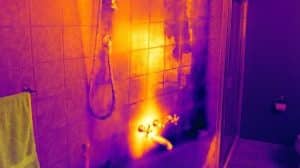
- Thermal imaging: Infrared cameras show temperature differences in walls, floors, and ceilings that reveal where moisture is spreading.
- Video camera inspection: A small camera inside the pipe shows cracks, corrosion, and damage from the inside.
Pinpointing the leak first means the repair is smaller, faster, and less disruptive. Learn more about our leak detection services.
What Happens After the Leak Is Found
Most leaks are fixed by repairing or replacing the damaged section of pipe. See our leaking pipe repair service for details. If a home has aging pipes with leaks showing up in several places, whole-home repiping is often the more reliable long-term fix. Our article on the signs your home needs repiping explains when that makes sense.
How to Prevent Leaks
- Schedule routine plumbing inspections to catch small problems early.
- Check your water pressure. Pressure that runs too high strains pipes and fittings.
- Replace aging or corroded pipes before they fail.
- Replace rubber appliance hoses with braided stainless steel lines.
Suspect a Leak? We Can Find It
Pro Plumbing Services provides leak detection and repair for homes and commercial properties across Marietta, Cobb County, North Fulton, and North Metro Atlanta. Our licensed plumbers give you upfront pricing before work begins. If water is actively leaking, we are available 24/7.
Call (678) 234-4900 or request service online.